
Introduction to Heat Exchangers
Heat exchangers are essential equipment widely used in modern industrial systems for transferring heat between two or more fluids. These fluids may be liquids, gases, or a combination of both. The main purpose of a heat exchanger is to transfer heat efficiently without allowing the fluids to mix with each other.
Industries such as power generation, chemical processing, petrochemicals, food processing, pharmaceuticals, and HVAC systems rely heavily on heat exchangers to maintain proper temperature control and improve energy efficiency. By transferring heat from one medium to another, heat exchangers help industries reduce energy consumption and improve overall system performance.
The design and manufacturing of heat exchangers require advanced engineering knowledge and precision fabrication techniques. High-quality heat exchangers ensure efficient heat transfer, safe operation, and long service life even under demanding industrial conditions.
What is a Heat Exchanger?
A heat exchanger is a mechanical device designed to transfer heat between two or more fluids that are at different temperatures. The heat transfer occurs through a solid surface that separates the fluids, preventing them from mixing while allowing thermal energy to pass through.
Heat exchangers are used for heating, cooling, condensation, and evaporation processes in industrial operations. They are designed to handle high pressure, high temperature, and corrosive environments depending on the specific industrial application.
The efficiency of a heat exchanger depends on several factors including surface area, material conductivity, flow rate of fluids, and temperature difference between the fluids.
Working Principle of Heat Exchangers
The working principle of a heat exchanger is based on the process of heat transfer. When two fluids with different temperatures flow through the heat exchanger, heat naturally moves from the hotter fluid to the colder fluid through a conductive surface.
There are three main heat transfer mechanisms involved:
Conduction: Heat moves through the metal wall separating the fluids.
Convection: Heat transfer occurs between the fluid and the metal surface.
Radiation: In some high temperature systems, heat transfer also occurs through radiation.
By controlling fluid flow and maximizing heat transfer surface area, heat exchangers can efficiently transfer large amounts of thermal energy.
Types of Heat Exchangers
Different industries require different heat exchanger designs depending on operating conditions and process requirements.
Shell and Tube Heat Exchanger
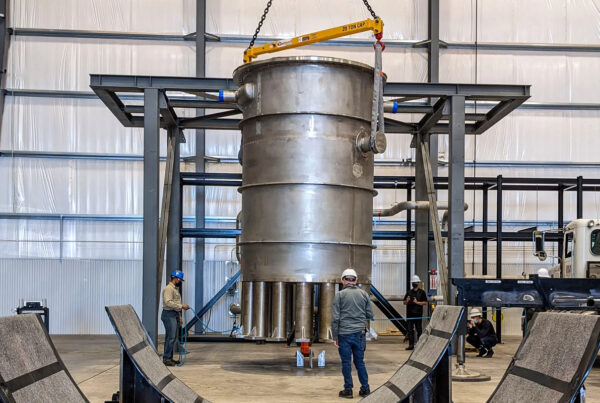
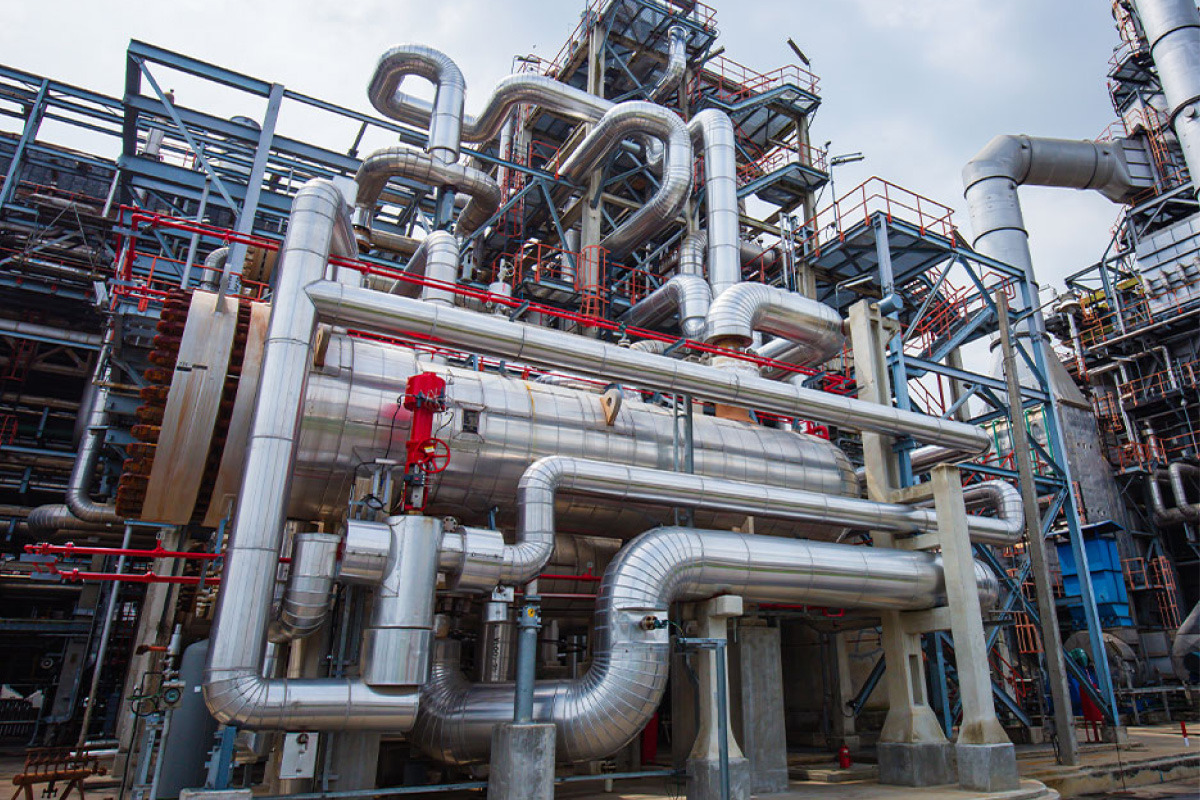
Shell and tube heat exchangers are one of the most commonly used types in industrial applications. They consist of a series of tubes enclosed within a cylindrical shell. One fluid flows through the tubes while the other flows around the tubes within the shell.
These heat exchangers are widely used in power plants, oil refineries, and chemical industries because of their high efficiency and durability.
Plate Heat Exchanger
Plate heat exchangers use a series of thin metal plates to transfer heat between fluids. The plates create large surface areas which improve heat transfer efficiency.
They are commonly used in food processing, HVAC systems, and pharmaceutical industries.
Air Cooled Heat Exchanger
Air cooled heat exchangers use air instead of water to cool fluids. Large fans push air across finned tubes to remove heat from the fluid inside.
These systems are widely used in locations where water availability is limited.
Double Pipe Heat Exchanger
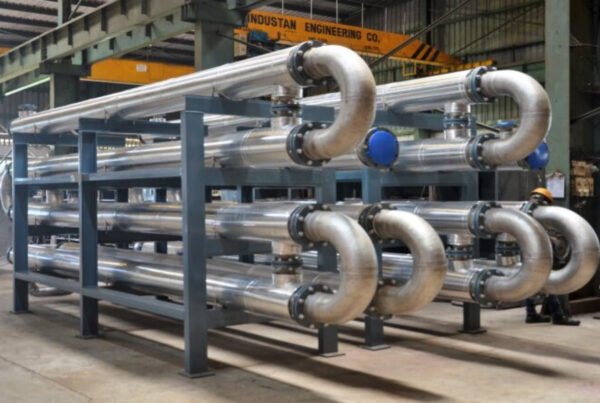
This type of heat exchanger consists of one pipe placed inside another pipe. One fluid flows through the inner pipe while the other flows through the outer pipe.
Double pipe heat exchangers are commonly used in small industrial processes.
Components of a Heat Exchanger
Heat exchangers consist of several components that ensure efficient heat transfer and safe operation.
Tubes or Plates
These components provide the surface through which heat is transferred between fluids.
Shell
The shell encloses the tubes in shell and tube heat exchangers and directs the flow of fluid.
Baffles
Baffles guide fluid flow and improve heat transfer by increasing turbulence inside the shell.
Inlet and Outlet Nozzles
These allow fluids to enter and exit the heat exchanger.
Support Structures
Structural components support the equipment and ensure stability during operation.
Materials Used in Heat Exchanger Manufacturing
Heat exchangers must be constructed from materials that provide strength, thermal conductivity, and corrosion resistance.
Stainless Steel
Stainless steel offers excellent corrosion resistance and is widely used in chemical and food industries.
Carbon Steel
Carbon steel is commonly used in industrial heat exchangers due to its strength and cost effectiveness.
Copper
Copper provides excellent thermal conductivity and is commonly used in HVAC heat exchangers.
Titanium
Titanium is used in highly corrosive environments such as seawater applications.
Choosing the right material is critical to ensure durability and efficient heat transfer.
Heat Exchanger Manufacturing Process
Manufacturing a heat exchanger involves several engineering and fabrication steps.
Engineering Design
Engineers design the heat exchanger based on process requirements, temperature conditions, and pressure levels.
Material Selection
Appropriate materials are selected based on corrosion resistance, strength, and thermal performance.
Tube or Plate Fabrication
Tubes or plates are manufactured with precise dimensions to ensure proper heat transfer efficiency.
Welding and Assembly
Different components are assembled using advanced welding techniques to ensure leak proof operation.
Pressure Testing
The completed heat exchanger undergoes pressure and leak tests to ensure safety and reliability.
Quality Inspection
Quality inspection procedures verify that the equipment meets engineering and safety standards.
Applications of Heat Exchangers
Heat exchangers are used in a wide range of industries to control temperature and improve energy efficiency.
Power Plants
Heat exchangers are used in power plants to transfer heat during steam generation and cooling processes.
Chemical Processing
Chemical industries use heat exchangers for heating, cooling, and condensing chemical products.
Oil and Gas Industry
Heat exchangers help refine crude oil and manage temperature in petrochemical processes.
Food Processing
They are used for pasteurization, cooling, and processing of food products.
HVAC Systems
Heating, ventilation, and air conditioning systems rely on heat exchangers for temperature regulation.
Benefits of High Quality Heat Exchangers
Using high quality heat exchangers provides several advantages for industrial operations.
Improved energy efficiency
Reduced operational costs
Reliable temperature control
Long service life
Better process performance
Efficient heat exchangers also help industries reduce environmental impact by minimizing energy waste.
Maintenance of Heat Exchangers
Regular maintenance is necessary to maintain heat exchanger efficiency.
Maintenance practices include:
Regular cleaning to remove scale and deposits
Inspection of tubes and plates
Leak detection and repair
Monitoring of pressure and temperature levels
Proper maintenance ensures long-term performance and prevents system failures.
Future Trends in Heat Exchanger Technology
Advancements in engineering and materials are improving heat exchanger performance.
Modern innovations include:
Compact heat exchanger designs
High performance heat transfer materials
Smart monitoring systems
Energy efficient industrial systems
These technologies help industries reduce energy consumption and improve sustainability.
Conclusion
Heat exchangers are essential equipment used across many industries for efficient heat transfer and temperature control. Their design, materials, and manufacturing quality play a significant role in ensuring safe and reliable operation.
With proper engineering design, advanced fabrication methods, and strict quality standards, heat exchangers can deliver high efficiency and long operational life in demanding industrial environments.
Industries that invest in high-quality heat exchangers benefit from improved productivity, reduced energy costs, and reliable system performance.
Looking for High Quality Heat Exchangers?
If you are searching for reliable and professionally manufactured industrial heat exchangers, Vertex Hi-Fab Engineering provides high-quality engineering and fabrication solutions designed to meet modern industrial requirements.
Our heat exchangers are manufactured using high-grade materials and advanced fabrication techniques to ensure durability, efficient heat transfer, and reliable performance.
To learn more about specifications and applications, visit our Heat Exchanger product page.